Resource user workflow
- Last verified
- Last verified Sep 4, 2026
Resource users are people connected to a resource Something needed to run an event, such as staff, guides, rooms, equipment, vehicles, or other operational capacity., such as a guide, instructor, or staff member.
Use this article when resource staff need to understand what they can see, how to respond to inquiries, and when to contact a back-office user.
Before you start
Confirm:
- the person is connected to the correct resource
- the resource has the right role or function, such as guide, room, or equipment
- the event has a resource requirement that uses that role or function
- whether email-link responses are sufficient or the person also needs optional login access
Respond without a login
A resource user can accept or reject an inquiry from the secure link in the inquiry email. They do not need a KORONA Event account for this normal response path.
- Open the inquiry email.
- Check the event name, date, time, location, and requested role or function.
- Use Accept when you can take the assignment or Reject when you cannot.
- Contact the organizer when the details are unclear instead of accepting an incorrect assignment.
The configured inquiry process A workflow that asks available staff members whether they can accept a resource assignment before allocation is confirmed. decides what happens next: a response can allocate immediately, use first-to-accept behavior, or wait for manual organizer review.
Optional dashboard and calendar access
Resource users may be able to open:
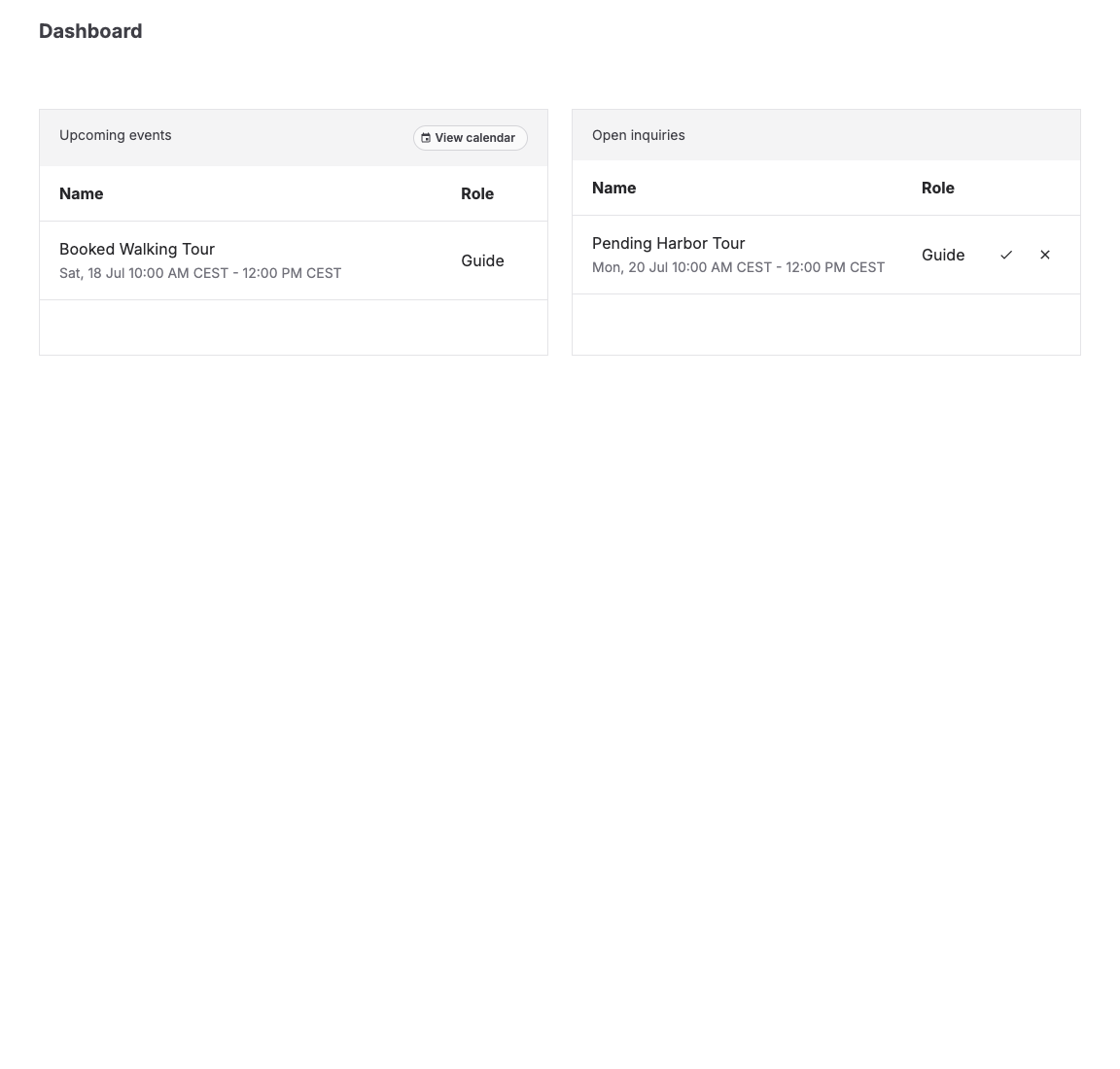
- Dashboard for upcoming assignments and open inquiries
- Calendar for relevant assigned or requested events
- Profile for their own user information
Enable login access only when the person should also use these views. They do not need full back-office access for email-link responses.
Read orders and check payment status
Back-office access depends on your role's permissions as well as which records are relevant to your resource. If your role can read orders, you can open a relevant order and see its payment status. The payment status and total apply to the whole order, even when you can see only the items relevant to your resource.
Reading an order does not automatically grant access to invoices, receipts, customer records, or ticket downloads. Your role needs the corresponding permissions and access to those records. Attendee and order-item access can also be granted separately from access to order details.
If you can read an order item without reading its order, open a relevant attendee and select View order item. The Order item view shows that item's prices, quantities, and booking information in read-only form. Saved item links also open this view when you cannot read the parent order. Links to attendees appear only when your role can read attendees.
Understand the states
| State | What it means |
|---|---|
| Open inquiry | The organizer is asking whether the resource can take the assignment. |
| Accepted | The resource user accepted the inquiry. Depending on setup, this may allocate the resource or tell the organizer the resource is available. |
| Rejected | The resource user declined the inquiry. The organizer may need to choose another resource. |
| Allocated | The resource is allocated to the event and should appear in relevant schedules. |
| Open slot | The event still needs a resource for that role or function. |
Expected result
Resource users can see the assignments and inquiries relevant to them, respond accurately, and give organizers enough information to keep event capacity and staffing reliable.
Troubleshooting
| Problem | What to check |
|---|---|
| Resource user cannot see the dashboard item | User account, resource connection, role/function, event requirement, and route permissions. |
| Invitation link is no longer active | Ask an administrator to send a new invitation, then open the link from the newest email. |
| Inquiry is missing | Confirm the event has an open resource requirement and that the inquiry was sent to the correct resource. |
| Accepted resource still shows as open | Check whether the inquiry process requires organizer confirmation or whether multiple slots must be filled. |
| Calendar shows too much or too little | Confirm resource-user permissions and whether the person is connected to more than one resource. |
| Event capacity is lower than expected | Check resource requirements, open slots, unavailable resources, and resource allocation state. |